Psychology is the scientific study of behaviour and mental processes. It uses the scientific method to discover general principles that govern human thought and behaviour while recognizing individual differences. Learners study psychological concepts they can apply to issues in their own lives, giving them lifelong skills to deal with issues proactively, solve problems, learn, and nurture healthy relationships. They learn and reflect on their own experiences to better understand how perceptions and biases form an imperfect lens through which experience is filtered. It also helps learners understand societal problems like drug dependency, aggression, and discrimination. Learning and applying psychological concepts encourages them to critically evaluate current practices in institutions and to participate in more informed solutions for contemporary problems—thereby preparing them in case they pursue a career in a helping profession after high school.
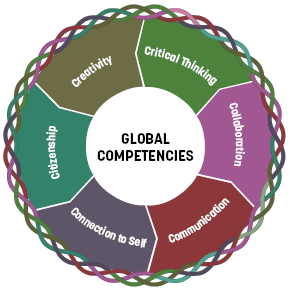

Critical thinking in psychology is an integral part of the discipline as it forms the basis of the ongoing study of human behaviour. It requires learners to constantly question, test, and re-evaluate principles of psychology in an ever-changing world. Critical thinking is essential to analyze the strengths and limitations of conclusions, and to weigh the validity and reliability of general principles of human behaviour while also respecting individual differences.
When critical thinking as a competency is applied in psychology, learners

Creativity in psychology involves the investigation and exploration of ideas and concepts through the innovative use of constructs and approaches. Due to the unobservable nature of much that psychology encompasses, creativity is essential in question posing, problem solving, and theorizing. Creativity is also expressed in the application of new knowledge or findings to foster positive change in our lives, organizations, and communities. Creativity in psychology asks learners to reconsider their ways of thinking and use problem solving to determine alternative iterations of their intuitions.
When creativity as a competency is applied in psychology, learners

Citizenship in psychology begins first with the recognition that each individual learner comprises a unique and worthy perspective among the broad community of learners. This comes with a responsibility to participate, inquire, and share results to broaden or deepen the reliability and validity of findings. Secondly, the members of this community of learners understand and respect their role in valuing diversity, promoting equity, and fostering inclusion in pursuit of a more just society by applying psychological principles to change lives, organizations, and communities in positive ways.
When citizenship as a competency is applied in psychology, learners
Connection to self in psychology involves learning about individual behaviour as it applies to psychological principles. Through reflecting on their own way of being, learners gain a sense of control over their own lives and make decisions with selfawareness as they interact with their emotional, intellectual, physical, and social worlds.
When connection to self as a competency is applied in psychology, learners

Collaboration in psychology is essential to accommodate the fluid and dynamic nature of human behaviour. It involves an openness to adopting perspectives, to questioning beliefs, and a willingness to both consider and to express perspectives. This approach to knowledge in psychology encourages learners to consider and reconsider ideas to refine them with the collective goal of a more complete understanding of human behaviour.
When collaboration as a competency is applied in psychology, learners

Communication in psychology requires a thoughtful understanding of the importance of clear and precise expression of ideas and concepts, as well as an effort to seek to understand others’ messages due to the dynamic communal nature of knowledge. It requires learners to carefully consider theirs and others’ word choices, non-verbal communication, as well as visual, graphical, and statistical representations of data and other context cues, to develop a deeper understanding of others and of the ideas, theories, or concepts they propose. Communication is essential to allow learners to challenge and expand their thinking about human behaviour.
When communication as a competency is applied in science, learners
Psychology is a human science
Psychology asserts that the human mind can be studied scientifically through empirical evidence. New data can develop and refine models and theories drawing from multiple methods, perspectives, or sources to increase the credibility of research.
Psychology seeks to understand and explain behaviour.
Psychology uses multiple approaches to understand and explain behaviour. These include how biological, social, and cultural factors influence behavior and mental processes. These mental processes (like perception, memory, decision-making) guide behaviour and are also influenced by the social and cultural environment.
Psychology is interactive and multidimensional.
Due to the dynamic nature of human behaviour, psychology utilizes a holistic approach, drawing simultaneously from different perspectives and approaches to understand and explain behaviour. Each approach (i.e., biological, cognitive, or sociocultural) contributes valuable insights, but no single approach is sufficient. These interactive and multidimensional perspectives in psychology enable accurate descriptions of the dynamics of behaviour and allow for reliable and valid predictions for therapeutic interventions.
Psychology has a wide-ranging impact on the world.
Psychology encompasses many sub-fields and careers, each representing the application of psychological principles to different aspects of human life. Applying psychological principles can change our lives, organizations, and communities in positive ways in pursuit of the Mino-Pimatisiwin (The Good Life). Psychology can help address individual flourishing and improve communities dealing with issues like mental health, prejudice, and aggression.
Psychology requires critical thinking.
Psychology involves evaluating evidence, recognizing bias, and questioning assumptions. In this manner, all knowledge in psychology can be considered tentative and subject to the ever-changing and evolving nature of human behaviour. This includes how our perceptions and experience of the world as learners are filtered through a biased and imperfect personal lens. Psychological theories and findings are therefore not universally applicable across time and culture.
Economics and Resources
Learners build an understanding of the impact, the sharing, and the interdependence of resources and wealth in relation to individuals, communities, and nations, both past and present. They examine economic factors that affect decision-making, the use and distribution of resources, and the development of technologies, and they consider social and environmental implications.