Student Services
Student Services Information for Parents
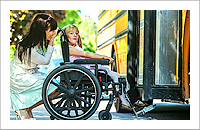
Parents play a vital role in the education of their children with special learning needs by working in partnership with educators and other personnel. Manitoba Education and Early Childhood Learning resources are available to ensure students with special learning needs are participating members of a school community.
Student Services/Inclusive Education
Students with special learning needs have disabilities of an intellectual, physical, sensory, emotional, or behavioural nature, or have a learning disability. The purpose of Student Services is to enable the equitable participation of students with special learning needs in the Manitoba school system.
All Students
The Amendment to the Public Schools Act: Appropriate Educational Programming provides the regulation to guide policy and programming for all students, particularly those with special learning needs, in receiving the appropriate educational programming they require. The regulations confirm in legislation that all students in Manitoba are entitled to receive appropriate educational programming that fosters student participation in both the academic and social life of the school. The legislation supports Manitoba’s philosophy of inclusion.

Inclusive schools provide a learning environment that is accessible to all students as a place to learn, grow, be accepted and enjoy all the benefits of citizenship.
In an inclusive school, all students are provided with the supports and opportunities they need to become participating students and members of their school communities. Collaboration among home, school and community is imperative. Core values and beliefs include:
- All students can learn, in different ways and at different rates.
- All students have individual abilities and needs.
- All students want to feel they belong and are valued.
- All students have the right to benefit from their education.
Students learn in different places and locations.
Legislation and Standards
- Appropriate Educational Programming Regulations
- Standards for Appropriate Educational Programming in Manitoba
(  481 KB)
The broad areas covered by the regulations include:
- General Obligations
- Assessment of students
- Individual Education Plans
- School-related Activities
- Transition into school
- Discipline, suspension, expulsion
- Dispute Resolution
Programming and Planning for Students with Special Learning Needs
School-based student support teams support all students, including those with special learning needs. Students with special learning needs are those who may require student specific support because they experience challenges that affect their ability to learn.

School-based student support teams vary in size and composition based on the needs of individual students. Teams may include a principal and/or vice principal, resource teacher(s), counsellor(s), classroom teacher(s), parent(s), school clinicians and others who have responsibility for students with special learning needs. The student may also participate as a member of the team, as appropriate. The school student support team plans and monitors the development and implementation of a student-specific plan, which can involve one or many aspects of the student's school life.
Each school division has a Student Services Administrator who coordinates the delivery of services and supports for students with special learning needs.
For more information see:
- Student-Specific Planning: A Handbook for Developing and Implementing Individual Education Plans (IEPs)
- Working Together: A Handbook for Parents of Children with Special Needs in School
- Working Together: A Handbook for Parents of Children with Special Needs in School [Brochure] ( 796 KB)
Dispute Resolution: When parents and school divisions disagree
Both informal and formal processes are available to parents. School Divisions in Manitoba have information available to parents about the local or school division policy. It is important to read the school division policy and to follow the line of communication provided.
Informal Process
Wherever possible, disputes should be resolved as close to the local level as possible. To assist parents and educators, Manitoba Education and Early Childhood Learning has developed resources for problem solving and informal dispute resolution for schools, families and communities.
- Working Together: A Guide to Positive Problem Solving for Schools, Families and Communities
( 369 KB) - Informal Dispute Resolution FAQ
Formal Process
The Amendment to the Public Schools Act: Appropriate Educational Programming required that a dispute resolution process be developed for use when there is a disagreement about the appropriateness of the educational programming or placement being provided by the school board to a pupil who has an individualized educational plan.
The formal process will be used to resolve issues that cannot be resolved at the school division level. Local processes must have been completed, including an appeal and decision by the Board of Trustees.
The formal dispute resolution process has been developed for use at the provincial level. The details are included in the Manitoba regulations 155/2005 ( 112 KB ) and further information is available in the following documents:
- Working Together: A Parent's Guide to Formal Dispute Resolution
- Appropriate Educational Programming in Manitoba: A Formal Dispute Resolution Process ( 334 KB)
- Manitoba Association of Parent Councils
- Formal Dispute Resolution FAQ
Cross Government Protocols
Ongoing collaborative planning and information sharing between parents, school divisions, partner departments and respective service jurisdictions will greatly improve educational outcomes for children. The following protocols have been developed collaboratively to support students, families, schools and communities towards appropriate educational programming.
- Protocol for Early Childhood Transition to School for Children with Additional Support Needs ( 464 KB)
- Education and Child and Family Services Protocol for Children and Youth in Care ( 1.39 MB)
- Companion Guide for the Education and Child and Family Services Protocol for Children and Youth in Care ( 1.03 MB)
- Bridging to Adulthood: A Protocol for Transitioning Students with Exceptional Needs from School to Community
- Working Together: A Parent's Guide to Transition from School to Community
- Wraparound Protocol for Children and Youth with Severe to Profound Emotional and Behavioural Disorders
( 1.46 MB) - Information Sharing Protocol Under the Youth Criminal Justice Act ( 95 KB)
- Companion Guide for the Information Sharing Protocol Under the Youth Criminal Justice Act ( 60 KB)
For more information visit: Planning with Partners
Funding for Student Services/Special Education
In Manitoba, all students are entitled to receive appropriate educational programming. Every school division is unique in how a continuum of supports is provided for students with special needs. If you want more information about how funding and supports are provided, talk to your school or school division administrators.
Manitoba Education and Early Childhood Learning publishes the Funding of Schools booklet each year which outlines the base support grants and categorical grants provided to school divisions. The Student Services Grant is used by school divisions to provide a continuum of supports for the students with special learning needs in their division.
The Student Services Grant was designed to assist students:
- with mild to moderate academic or learning needs
- who are considered “at risk” due to social, emotional, behavioural, or physical factors that impact on their ability to succeed in school
- who require behaviour intervention
Ask your school principal or Student Services Administrator about the continuum of supports in your school division.
In addition, there is a categorical grant to support students with severe to profound special learning needs. Historically, this grant was known as special needs level 2 and level 3 funding and school divisions were expected to submit student-specific applications. Beginning in the 2017/18 school year, school divisions will receive the grant without writing student specific funding applications. Ending the student specific application process for Level 2 and 3 funding will avoid the negative labeling of students by funding category and will allow school divisions to plan for and provide appropriate educational programming that is inclusive of all students.
For more information visit Funding for Student Services
Appropriate supports for programming are determined by school divisions and school teams in consultation with parents. Talk to your school or division about programming and the supports your child needs.
Student Services/Inclusive Education Resources Documents
Below are a few resources written specifically to support parents and families including information on how you can establish a collaborative relationship with the educators who work with your child.
- Working Together: A Handbook for Parents of Children with Special Needs in School
This document highlights the importance of the diverse and changing learning needs of students with special needs. It also describes some of the services and activities that might be used to meet individual student needs at school. - Working Together: A Handbook for Parents of Children with Special Needs in School [Brochure] ( 796 KB)
This brochure is a brief overview of the information for parents of children with special needs available in the handbook Working Together: A Handbook for Parents of Children with Special Needs in School - Services for Students Who Are Blind or Visually Impaired
The information in this guide will help Manitoba families and schools support students who are blind or visually impaired from Kindergarten through Grade 12. - Educators' Resource Guide: Supporting Students Who Are Deaf and/or Hard of Hearing
The information in this guide will help Manitoba families and schools support students who are Deaf or hard of hearing from Kindergarten through Grade 12. - Working Together: A Parent's Guide to Transition from School Community
This guide includes information to assist families in participating in transition planning for their son or daughter. It is intended for parents, guardians, foster parents and caregivers. - Working Together: A Guide to Positive Problem Solving for Schools, Families, and Communities
The purpose of this document is to "... give everyone -- parents, educators, and community members -- the information to take part in the co-operative, creative problem solving process of informal dispute resolution. It is intended to serve as resource support to local school and school division dispute resolution policies and practices."
For more information visit Student Services Documents
Safe and Caring Schools
Manitoba Education and Early Childhood Learning schools are committed to providing safe learning environments for all children and youth. Utilizing a whole school approach to safety and belonging, educators, parents and students work together to address the serious issues that are recognized as 'bullying' and school violence. Healthy school communities, where positive relationships are established, are known to prevent and respond to issues of school safety.
If your child is having a problem feeling comfortable and safe at school, it is important that you communicate with and work with the school team to solve the issue as quickly as possible.
The ‘communication protocol’ recommended follows these guidelines:
- Listen to your child to determine the issue’s severity and identify his/her needs.
- Contact your child’s teacher and/or school counsellor to seek solutions. Ask how you can be a part of the solution. The teacher or counsellor may involve the principal if the incident warrants.
- If the issue is not resolved, contact your school principal and ask for follow-up. Request that the school principal communicate the plan to you.
- If your child continues to experience problems ask the school principal if there are other resources in the school division or community that could assist in a resolution.
- If a resolution is not found or you are not satisfied with the school response, contact with your School Division’s Superintendent to explain your experience and request resolution.
- If the problem still has not been resolved, contact the Board of Trustees of your School Division. Your elected school trustees can assist you with this process.
For more information visit Safe and Caring Schools
Contact
General Inquiries
Inclusion Support Branch
Manitoba Education and Early Childhood Learning
Telephone: 204-945-7912
Toll Free in Manitoba: 1-800-282-8069, ext. 7912
Email: isbinfo@gov.mb.ca